
How to Choose the Best Life Planner App (Compared): Task Manager, Habit Tracker, or All in One?

The best life planner app may be the one that helps you use fewer apps.
I know. More features can sound like more help. But if your tasks are in one place, your habits in another, and your day in a third, keeping everything up to date can start to feel like a job of its own.
So, should you choose a task manager, a habit tracker, a daily planner app, or an all in one planner? The honest answer depends less on which app has the longest feature list and more on where your life feels scattered.
Not the most powerful tool, but the right amount of support.
First, what problem are you trying to make lighter?
A task manager helps you remember and organize things you need to do. A habit tracker helps you notice whether you’re showing up for routines. A daily planner helps you decide when your commitments will fit.
Those are different jobs. And separate apps can do them very well.
The friction tends to arrive when you need the pieces to talk to each other. Your habit supports a goal, your goal shapes a project, and your project has tasks due this week, but all of that context is split across screens.
If that sounds familiar, you may not need another productivity app. You may need fewer places to check.
When a task manager is enough
If your main source of stress is “I’m afraid I’ll forget something,” start with a focused task manager. It gives open loops somewhere to land and helps you sort what needs attention now from what can wait.
Todoist, for example, centers on task capture, projects, priorities, labels, subtasks, and views for what’s due. That focus can be a real advantage: if a reliable list is what you need, you may not want a whole life dashboard.
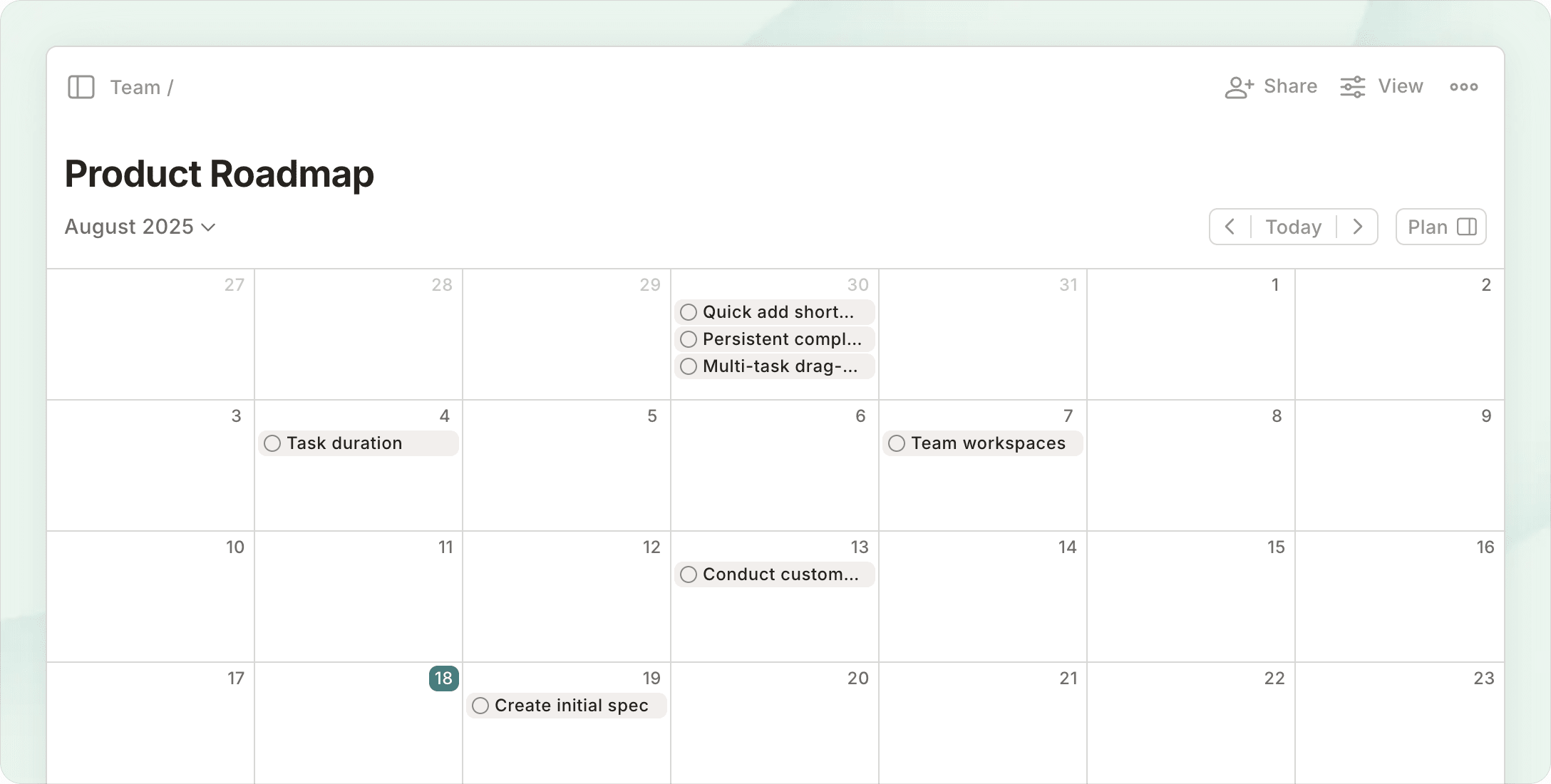
A task manager may be the right fit if you:
- Need a quick, dependable place to capture responsibilities.
- Want to organize work or household projects into manageable steps.
- Prefer a focused tool and are comfortable tracking habits or goals elsewhere.
There’s no prize for consolidating tools you genuinely like. A separate app is not a problem just because it’s separate.
Choose focus when focus is what frees you.
When a habit tracker is the right tool
Sometimes the issue isn’t forgetting what to do. It’s wanting a routine to feel easier to return to.
A dedicated habit tracker can help you record a walk, a reading habit, or a regular break without turning every day into a performance review. Look for flexible schedules, clear history, and reminders you can live with, not just a streak that makes one missed day feel like failure.
A habit tracker may be enough when you’re building one or two routines and don’t need to connect them to a larger plan. But if you want to understand how a routine supports a goal, or why it keeps slipping during busy weeks, you may want that context nearby.
Tracking is not the goal. Understanding what supports you is.
When your day needs a shape
If you have plenty of tasks but no sense of where they fit, a daily planner app might help more than a longer to-do list.
A visual calendar or daily schedule can help you see whether the day is already full before you add another commitment. Some people benefit from planning tasks alongside appointments and time blocks; others would rather keep their day open and work from a short list.
TickTick brings tasks, calendar views, a habit tracker, and focus tools into one app. That can be useful if you want a broader set of day-planning tools without managing several separate products.

A daily planner is likely to help when:
- You struggle to see how much your day can realistically hold.
- Appointments and tasks need to sit alongside each other.
- You want to make room for breaks, not just fit in more work.
Just remember: a schedule should support the day you have, not become another ideal day you feel you’ve failed to follow.
A plan is there to give your day shape, not to take away your say.
When an all in one planner makes sense
An all in one planner is worth considering when the connections between your tasks, habits, goals, and projects matter as much as the individual lists.
That can be especially helpful if you’re a solopreneur. Your business plan, client work, personal commitments, and health routines all draw from the same limited time and attention. If each one lives in a separate system, you may find yourself doing the work of connecting them manually.
An all-in-one app can offer a shared home for that bigger picture. But “all in one” should not mean “everything on every screen.” It should mean the pieces you actually use can work together without adding a new layer of upkeep.
At FlowMind, we bring together tasks, habits, goals, projects, timelines, roadmaps, and AI-powered insights. The intention is not to track every corner of your life. It’s to help you see what you’re working toward, what’s moving, and where you may need to adjust.

An all-in-one life organization app may suit you if:
- You’re tired of copying information between tools.
- Your daily tasks often feel disconnected from your longer-term goals.
- You want to see work and personal commitments in the context of your whole life.
- You’d rather maintain one adaptable system than several overlapping ones.
We also want to be honest: if you already have a simple setup that feels calm and dependable, you may not need to replace it. And if you rely on a specialized app for a particular workflow, keeping it may be the sensible choice.
Consolidate for clarity, not for the sake of having fewer icons.
A simple comparison: which kind of planner fits?
| If your main need is… | Consider… | Why |
|---|---|---|
| Remembering and sorting tasks | A task manager | It gives your open loops a clear home. |
| Building or reflecting on routines | A habit tracker | It makes patterns easier to notice. |
| Seeing how commitments fit into a day | A daily planner app | It puts tasks and time in conversation. |
| Connecting daily actions to bigger goals | An all in one planner | It can reduce the work of joining up separate systems. |
Think of this as a starting point, not a rulebook. One app may cover more than one need; you don’t have to fit yourself into a category.
A low-pressure way to choose
You don’t need a full system overhaul. In fact, moving every note and reminder in one weekend can create a whole new project to manage.
Try this instead:
- Notice the repeated friction. Are you forgetting tasks, losing track of routines, or struggling to see how the day fits?
- Pick the smallest useful test. Try one task manager, one habit tracker, or one all-in-one workspace with real commitments from your week.
- Use it for a few days as you really live. Add personal plans and work tasks; don’t create an imaginary perfect week.
- Check how it feels to maintain. Does the tool reduce mental clutter, or ask you to update the same information twice?
- Keep what genuinely helps. You can move one category at a time. You don’t need to migrate everything to learn something useful.
A helpful system should give you a clearer next step and a little more room to breathe. It shouldn’t make you feel watched, behind, or responsible for constantly tending to an app.
Choose the system that gives your attention back
The best life planner is not automatically the one with the most features. It’s the one that fits how you actually want to live.
A task manager may be plenty. A separate habit tracker may be exactly right. Or perhaps you’re ready to bring more of your life into one home, because the effort of keeping your tools in sync has become heavier than the tools themselves.
If you’re curious about a more connected approach, you can explore FlowMind’s features, see pricing, or read our thoughts on using what you need, not everything you have.
We believe structure should make space.
We believe progress deserves to be noticed without becoming a scorecard.
And we believe the point of organizing your life is not to spend more time managing it, but to have more room to live it.
Which part of your current setup feels most scattered: tasks, habits, your daily plan, or the connections between them?